Chapter 6: Professional Leadership and Agency
Our Home-Grown AI Story
Our Home-Grown AI Story
Canada has played a remarkable role in shaping the global AI landscape. From groundbreaking research to influential researchers and scholars, Canadian contributions continue to shape how AI is developed and used around the world.
As Canadian educators, understanding this history can be a source of national pride and inspiration. It is also an opportunity to recognize our place in the evolving AI landscape and the crucial role we play in shaping a future with AI.
In this final chapter, we will explore Canada’s AI story and connect that story to your own professional growth, leadership and agency. Educators are not simply users of technology. You are all learners, decision-makers, advocates and leaders who play an essential role in ensuring meaningful, rather than passive, integration of emerging technologies into teaching and learning.
Remember, AI literacy is not only about how to effectively engage with AI tools, but about developing the knowledge, awareness, and critical understanding needed to make informed decisions about if, when, and how these technologies should be used.
Through ongoing reflection, self-awareness, and professional goal setting, you will consider your current AI literacy level to identify opportunities for continued learning. We will also explore how you can support your colleagues and learning communities in navigating AI with confidence.
By remaining curious, reflective, informed and willing to grow, you can contribute to shaping a future where AI plays a meaningful role in education and keeps educators and students at the heart of every decision.
Milestones in Canadian Innovation
Did you know that Canada has played a foundational role in the development of the modern AI technologies we use every day?
Canada’s leadership didn’t happen overnight. Long before AI entered into the public consciousness, Canadian researchers and institutions were making groundbreaking discoveries and driving innovation.
Explore some of the major milestones that helped establish Canada as a global leader in AI:
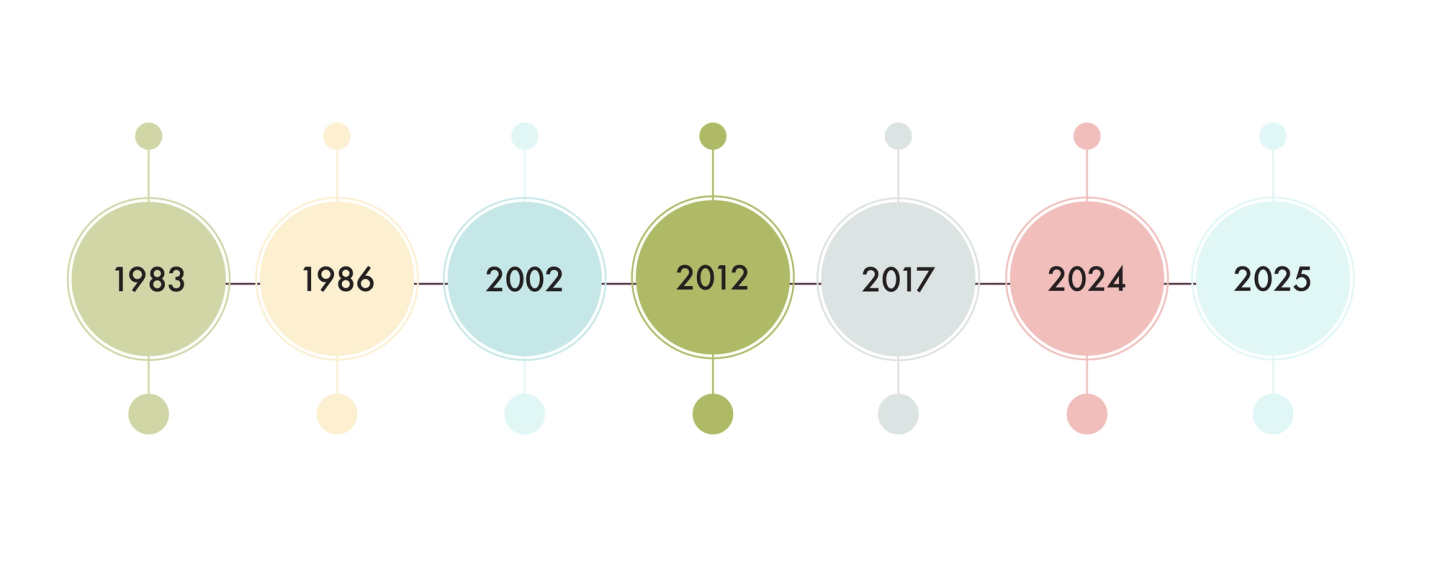
1983: Supporting AI Through the AI Winter
The Canadian Institute for Advanced Research (CIFAR) began supporting ambitious AI research at a time when global interest and funding were dropping.
1986: A Breakthrough in Machine Learning
Geoffrey Hinton and collaborators published influential research on backpropagation, which is a method that allows neural networks to learn from errors and improve their performance.
2002: Alberta Becomes an AI Research Hub
Major provincial investment helped establish a machine learning research centre at the University of Alberta, strengthening Edmonton's leadership in reinforcement learning.
2012: AlexNet Transforms Image Recognition
A University of Toronto research team achieved a major breakthrough in image recognition with AlexNet, helping spark a global interest in deep learning.
2017: Canada Launches The World’s First National AI Strategy
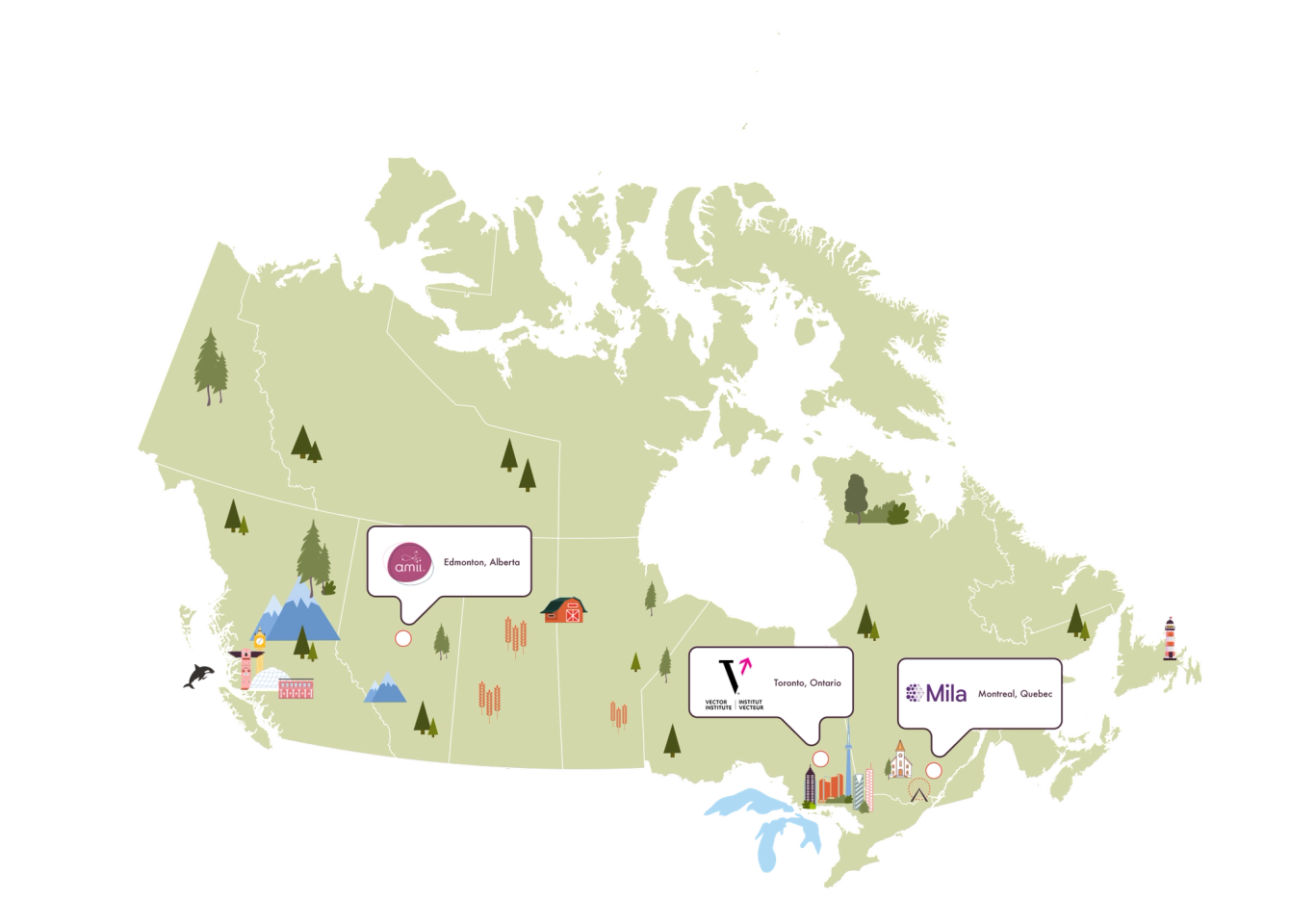
Canada introduced the Pan-Canadian Artificial Intelligence Strategy, strengthening its national AI ecosystem through research hubs in Edmonton (Amii), Montréal (Mila), and Toronto (Vector Institute).
2024: A New Focus on AI Safety
Canada established the Canadian AI Safety Institute to advance research on AI risks, safety, and public trust.
2025: Global Recognition for Reinforcement Learning
University of Alberta researcher Richard Sutton received the ACM A.M. Turing Award, alongside Andrew Barto, recognizing their pioneering work in reinforcement learning.
These milestones are only a few of Canada’s many contributions to AI, and the story is still unfolding. Full timelines are available to discover more of the research breakthroughs, innovations, and institutions that have shaped where AI is today.
Want to Learn More?
Explore the Resource: Canada’s AI Story
Canadian AI Pioneers & Ecosystems
What began with decades of research and a commitment to innovation has grown into a nationally connected AI ecosystem, bringing together researchers, universities, industry partners, and governments.
Understanding the people and institutions behind these achievements can help to recognize that AI is not something that just appeared with the invention of ChatGPT. It is the result of human curiosity and a willingness to explore new possibilities even when the path forward is uncertain.
Meet Some of Canada’s AI Pioneers
Behind Canada’s AI achievements are the researchers and scholars who have helped shape and transform our understanding of how machines learn, recognize patterns and make decisions. Three influential leaders with strong connections to Canadian research institutions are:
Known for his foundational work on artificial neural networks, Hinton helped develop approaches that underpin modern deep learning. His research at the University of Toronto contributed to major advances in image recognition. He received the 2018 A.M. Turing Award and the 2024 Nobel Prize in Physics.
Canada’s National AI Institutes
Established in 2017, the Pan-Canadian AI Strategy supports three national AI institutes that bring together researchers, develop AI talent, and foster collaboration across industries and sectors.
Amii
Located in Edmonton, Alberta, the Alberta Machine Intelligence Institute (Amii) builds on the University of Alberta's strengths in reinforcement learning and machine learning. Amii connects research with practical applications, supports AI literacy and education, and promotes responsible innovation.
Vector Institute
Located in Toronto, Ontario, the Vector Institute advances machine learning research while connecting academic expertise with industry and public-sector partners. It supports AI talent development and the application of research to challenges in areas such as health care and business.
Mila
Located in Montreal, Quebec, and founded by Yoshua Bengio, Mila is internationally recognized for research in deep learning. Its work includes machine learning advances, interdisciplinary collaboration, and research into the social and ethical implications of AI.
A Connected Ecosystem of Innovation
While Edmonton, Montreal and Toronto are home to Canada’s national AI institutes, innovation in AI extends far beyond the three cities. Universities, research networks, startups, industry partnerships, and regional innovation initiatives are helping shape how AI is developed and used responsibly.
Organizations such as the Canadian Institute for Advanced Research (CIFAR) help connect researchers and support long-term scientific discovery. These networks bring together expertise from different disciplines, institutions, and communities.
Transforming National Innovation into Classroom Confidence
Canada’s contributions to AI are a source of national pride and they also provide an opportunity for educators to connect their history of innovation to learning experiences for students.
Supporting students' AI literacy doesn't always mean bringing AI tools into the classroom. Instead it could mean helping students ask questions, think critically, and make informed decisions about the technologies shaping their lives.
Canada’s AI story offers a starting point for these conversations. Discussions about emerging research, national innovation, and ethical responsibility might be particularly relevant for secondary students. But younger learners can engage with these ideas too, through age-appropriate conversations about invention, problem-solving, online safety, and how technology affects society.
Bringing the AI Story into Your Classroom
Consider how you might use Canada’s AI story to spark curiosity and encourage thoughtful discussions with students.
- Why might people invent new technologies? What problems are they trying to solve?
- What qualities help someone become an innovator or inventor?
- Just because we can create or use a new technology, does that mean we always should?
While these questions just scratch the surface, as an educator with a deep understanding of your students and professional context, you are best positioned to recognize what questions, curiosities and uncertainties your students might be grappling with when it comes to AI. Your understanding of your students, their learning needs, and your unique professional context allows you to create meaningful opportunities for discussion, inquiry, and critical reflection.
Reflect: Your Professional Leadership
You don’t need to be an AI expert to meaningfully support students in navigating an AI-mediated world. You already have the essential building blocks to begin thoughtful discussions.
As you consider your own role as an educator, ask:
- How might understanding Canada’s AI story strengthen your confidence in discussing AI with students, parents and colleagues?
- Where might Canada’s AI story connect naturally to your existing curriculum?
- How can you model curiosity and critical thinking without feeling pressured to adopt every new tool?
Responsible AI Governance in Canada
While research remains central to Canada's AI leadership, the country is also helping shape how people learn about AI and how these technologies are developed, governed, and adopted responsibly.
But what does responsible AI actually mean?
At its core, responsible AI is about ensuring that AI technologies are developed and used in ways that reflect human values, uphold ethical principles, and respect human rights. It involves establishing guidelines, practices, and safeguards that promote fairness, safety, transparency, and accountability while minimizing potential harms to individuals and communities.
As we've discussed throughout the chapters, responsible AI use is an important consideration for educators. Decisions about AI can affect student privacy, equity, assessment, learning outcomes, and professional autonomy. Understanding Canada's approach to AI governance can help us think more critically about what AI should do, who it should serve, and when its use is appropriate in the classroom.
The Canadian Artificial Intelligence Safety Institute (CAISI)
The Canadian Artificial Intelligence Safety Institute (CAISI) was established in November 2024. It represents an important step in Canada's efforts to better understand and address the risks associated with the AI systems Canadians encounter every day.
CAISI brings together expertise from Canada's research community, including the National Research Council of Canada (NRC), the Canadian Institute for Advanced Research (CIFAR), and Canada's three national AI institutes. CAISI also works with international partners, recognizing that the opportunities and challenges associated with AI go beyond national borders.
Want to Learn More?
Explore the Resource: Canadian Artificial Intelligence Safety Institute
Canada’s National AI Strategy: AI for All
In June 2026, Canada launched its national AI strategy, AI for All. Building on earlier investments in AI research and innovation, the strategy places a stronger focus on how AI can benefit Canadians and their communities.
The strategy focuses on three interconnected priorities:
- Trust: Building confidence through safety, transparency, privacy protections, and responsible governance.
- Opportunity: Helping Canadians develop the knowledge and skills to participate in, influence, and benefit from an AI-influenced society.
- Sovereignty: Strengthening Canada's ability to make independent decisions about how AI technologies, data, and infrastructure are developed and governed.
Together, these priorities guide six areas of national action, including protecting Canadians and safeguarding our democracy, empowering Canadians, powering AI adoption, building the foundation for Canadian sovereign AI, scaling Canadian champions, and building trusted partnerships.
The strategy encourages responsible AI adoption. However, AI literacy and AI adoption are not the same thing. Understanding AI does not mean that every educator or student must use it. Rather, informed participation includes the ability to evaluate AI critically, understand its implications, and make thoughtful decisions about when its use may or may not be appropriate.
Explore the Resource: Canada’s National AI Strategy, AI for All
National Principles in Classrooms
While the AI for All strategy doesn't replace provincial education policies, school authority guidelines, or educators' professional responsibilities, it can help guide the questions you ask when considering AI for your own practice or classroom use.
This is where your professional leadership and agency matter. Being an AI-literate educator means understanding both the potential uses and ethical implications of AI. It also means having a voice in conversations and decisions about how these technologies are used, and advocating for thoughtful, responsible approaches within your learning community and beyond.
Reflect: Consider Your Role
- How might Canada's national commitments to responsible AI inform conversations or decisions within your school community?
- What opportunities exist for educators to contribute their professional perspectives to the development of school or division-level AI guidelines?
- How can you advocate for approaches to AI that reflect the needs, values, and priorities of your students and learning community?
By connecting national priorities with local realities, educators can help ensure that decisions about AI remain grounded in educational values, professional judgment, sound pedagogy, and the best interests of all students.