Chapter 1: What is AI?
So What for Classrooms?
So What for Classrooms?
AI is not only changing the tools available in classrooms. It is becoming part of the wider world students are learning about, creating within, and preparing to participate in as citizens.
We have already explored the foundations behind AI: what artificial intelligence and machine learning are, how AI systems learn from data, and the resources these systems rely on. We’ve also looked at how AI capabilities are evolving, from systems that recognize patterns and generate content to systems that can increasingly work toward goals and take action on our behalf. For K-12 educators, understanding these foundations creates an opportunity to begin connecting AI to teaching and learning.
- Science & Technology — How machines work, computing systems, infrastructure, and energy use
- Mathematics — Data, patterns, probability, and statistics
- Social Studies — AI's influence on society, communities, work, media, fairness, and access
- Language Arts — Information, authorship, creativity, and AI-generated content
- Fine Arts — Creativity and AI-generated content
- Career Education — How AI is changing different professions and the world of work
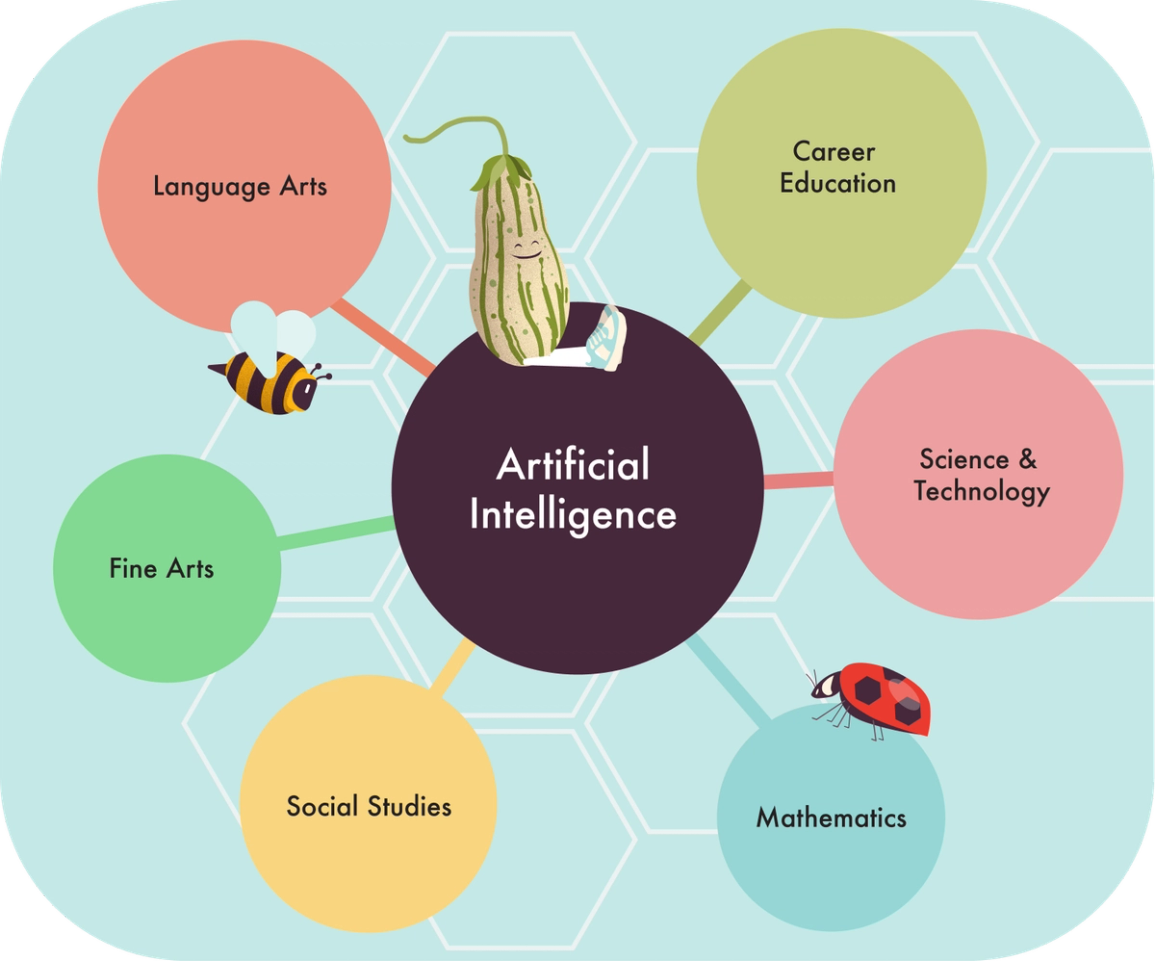
These examples do not require students to use AI themselves. A class might investigate how a recommendation system works, examine examples of AI-generated images, explore the physical infrastructure that AI systems depend on, consider the energy and other environmental resources they require, or debate a social issue involving AI. In this way, AI itself can become something students investigate, question, and learn about.
AI brings new questions into teaching and learning, as well as prompts us to return to some enduring ones, such as:
- What knowledge is of the most worth?
- What is the purpose of education?
These longstanding questions take on new dimensions when students can use AI to search for information, generate text and images, brainstorm ideas, receive feedback, translate languages, and assist with many other tasks. AI can make some kinds of work easier or faster and can offer students new forms of support. But completing a task more easily does not necessarily mean that more learning has taken place. Sometimes the practice, decision-making, problem solving, and sustained thinking involved in doing the work are themselves important parts of learning. This means educators need to consider not only what AI can help students do, but what students need to learn through doing. If a student can ask AI to summarize a reading, suggest an argument, revise a paragraph, solve a problem, or create an image, what should the student still understand or be able to do independently? When might AI extend a student’s thinking, and when might it take the place of thinking or practice that is important for learning?
The growing use of AI also brings practical considerations around assessment, authorship, plagiarism, accuracy, bias, responsibility, and the extent to which a student’s work reflects their own understanding. As AI becomes capable of contributing more to the work students produce, educators may need to pay greater attention not only to the finished product, but also to the learning that happens along the way.
Importantly, these are not simply questions about whether AI should or should not be allowed. Instead they centre what we want students to know, understand, and be able to do. They also invite us to consider what kinds of experiences help students develop independence, judgment, creativity, curiosity, and the capacity to think critically about the information and tools they encounter.
And, there are no simple or universal answers to these educational and pedagogical considerations. What learning about and with AI looks like in a Grade 3 classroom may be very different from what it looks like in a Grade 12 classroom, and its relevance will vary across subjects, students, contexts, and learning goals. There may be times when AI can extend or support learning and others when using it may remove an important opportunity for students to think, practice, create, or struggle productively on their own.
We’ll return to these questions throughout the chapters ahead, looking more closely at what they mean for teaching, learning, assessment, responsible use, and the essential pedagogical choices educators make in their classrooms.
Let’s See What You Learned!
You’ve covered a lot in this chapter! Take a few minutes to check your understanding of the key ideas we’ve explored about AI, how it works, and what it means for teaching and learning.
Question 1 of 10
Which statement best describes artificial intelligence (AI)?
What’s Next in Your Learning Journey?
In Chapter 2, we’ll build on this foundation by looking more closely at how AI learns and makes decisions. We’ll explore how AI identifies patterns in data, how those patterns shape the outputs it produces, and how AI uses them to make predictions and recommendations. Understanding these processes can help educators look beyond what an AI tool appears to do and develop a clearer picture of what is actually happening behind the screen.