Chapter 5: Student AI Literacy & Future Readiness
Canada’s Skills for Success
Canada’s Skills for Success
In the previous topic, we investigated how AI is changing the world of work, the skills students may need for an uncertain future, and how educators can support career exploration and access to opportunities. Now, we’ll look at how these skills connect to a broader Canadian framework that helps define the capabilities people use across learning, work, and everyday life.
One way to make this connection is through Canada’s Skills for Success framework, developed by Employment and Social Development Canada. The framework identifies nine foundational skills that people use across learning, work, and everyday life:
Reading, Writing, Numeracy, Digital, Problem Solving, Communication, Creativity and Innovation, Collaboration, and Adaptability.
Together, these skills provide a useful framework when considering the broader capabilities students may need as technology continues to change.
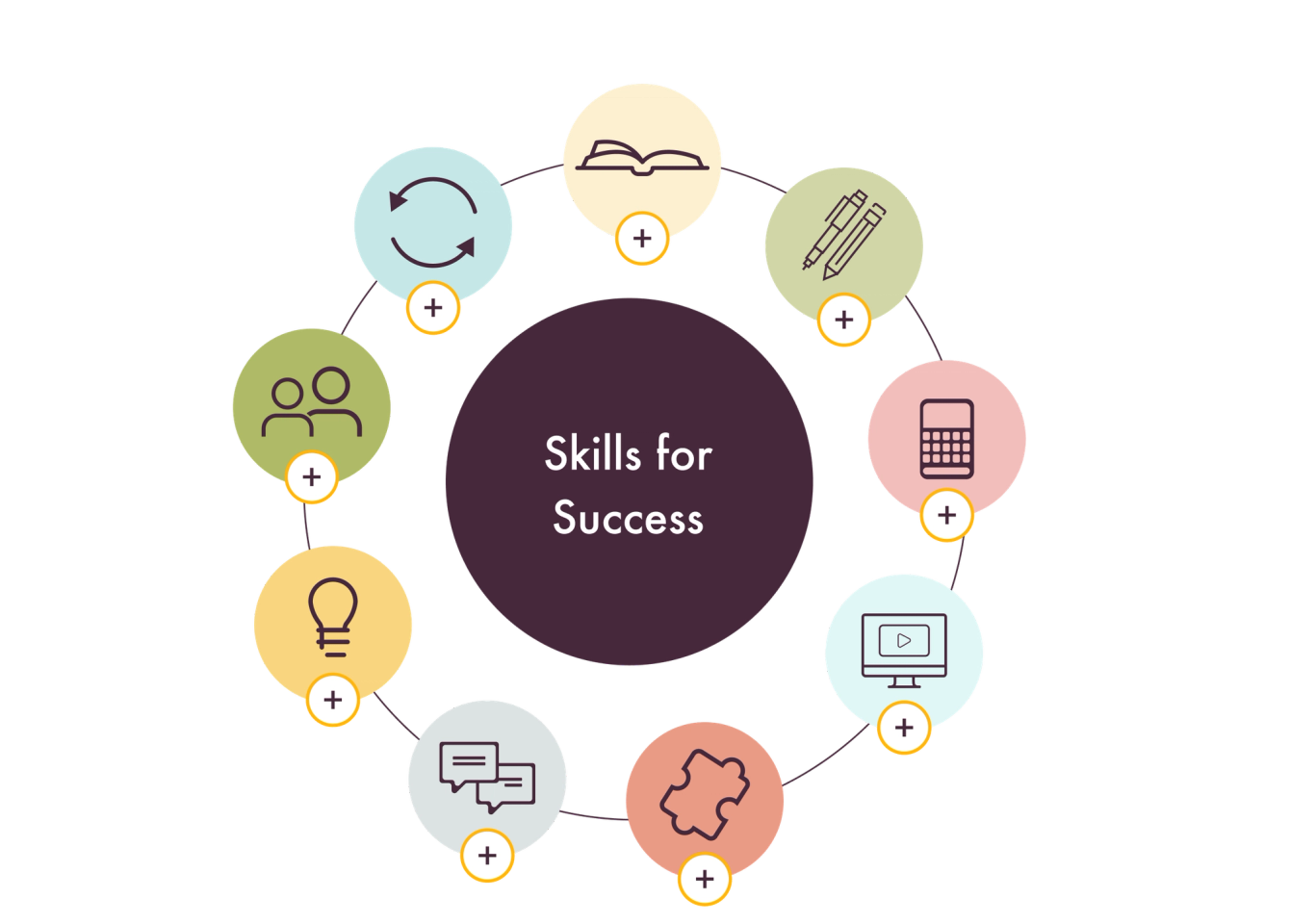
Reading
Finding, understanding, and using information presented through words, symbols, and images.
Writing
Sharing information and ideas using written words, symbols, and images.
Numeracy
Finding, understanding, using, and communicating mathematical information.
Digital
Using digital technology and tools to find, manage, apply, create and share information and content.
Problem Solving
Identifying and analyzing a problem, considering possible solutions, making decisions, and learning from the result.
Communication
Receiving, understanding, considering, and sharing information and ideas through speaking, listening, and interacting with others.
Creativity and Innovation
Imagining, developing, and applying new ideas or approaches.
Collaboration
Contributing and supporting others to achieve a common goal.
Adaptability
Adjusting goals or behaviours when expected or unexpected change occurs.
Want to Learn More?
Explore the Resource: Skills for Success – Government of Canada
As AI continues to reshape how people learn, work, and participate in society, these foundational skills remain essential. Many are already embedded in everyday classroom learning, providing a valuable starting point for preparing students to navigate an AI-enabled world.
Next, we’ll explore how familiar classroom competencies connect to Canada’s Skills for Success and how these competencies can naturally build on what they are already teaching.
Connecting Classroom Competencies to Canada’s Skills for Success
Educators already help students develop many competencies, including problem solving, communication, and adaptability, across the curriculum. As AI becomes more common in students’ lives, these skills remain essential, but students may need to apply them in new ways.
The OECD/European Union AI Literacy Framework (2026) reinforces this connection by emphasizing the knowledge, skills, and attitudes needed to understand AI, critically evaluate its outputs, and make informed decisions about its use. The examples below show how familiar classroom skills can be applied in AI-related contexts and how they connect to Canada’s Skills for Success.
Building on Familiar Classroom Skills
| Familiar Classroom Skill | New Demand in an AI-Mediated Context | Skills for Success |
|---|---|---|
Interpret data and explain what it shows | Check an AI-generated interpretation of data against the original data and explain the differences | Numeracy, Problem Solving |
Judge whether a source is credible | Trace AI-generated claims to reliable sources before trusting or using them | Reading, Digital |
Evaluate how information is presented | Recognize when information is personalized or recommended by AI and consider how this shapes what they see | Reading, Digital |
Build an argument from evidence | Identify what an AI-generated response leaves out and where another source or human perspective is needed | Communication, Problem Solving |
Revise work using feedback | Decide whether AI-generated feedback actually strengthens the reasoning | Writing, Adaptability |
Learn to use unfamiliar tools | Explore an unfamiliar AI tool, test its capabilities and limitations, and determine when it is appropriate to use | Digital, Adaptability |
AI literacy does not replace foundational skills. It builds on them, helping students apply familiar ways of thinking, questioning, communicating, and problem solving in new contexts.
Participating in Democratic Discourse
As AI becomes part of more decisions that affect people’s lives, questions about how these technologies should be used are increasingly matters of public discussion. Who should decide where AI is appropriate? What protections should be in place? And how can people have a say in decisions that affect their communities?
These questions connect to democratic discourse: the open, respectful exchange of ideas through which people form opinions, weigh different perspectives, and help shape decisions that affect their communities. Supporting democratic participation is already an important part of Canadian education. Alberta’s Social Studies Curriculum, for example, aims to develop citizens who are engaged in the democratic process and aware of their capacity to effect change, and Manitoba’s Social Studies Curriculum aims to prepare students to join the public dialogue that characterizes a democracy.
Students already practice these skills through classroom discussions, debates, student councils, and community projects. These experiences encourage them to go beyond sharing opinions by evaluating information, considering different perspectives, and remaining open to questioning and revising their own thinking.
Applying Skills for Success to Civic Participation
These same skills can help students engage with public discussions about AI and its impact on society. The examples below introduce issues that affect people and communities, along with questions and activities that invite students to consider how these technologies should be used and governed.
As you explore, consider which issues are appropriate for your students’ grade level and how you might adapt the questions and activities to their age and understanding.
Reflect: From Understanding to Participation
Consider one of the scenarios above. How could you create opportunities for students to move beyond identifying concerns and contribute their own perspectives?
Through activities such as investigating issues, discussing different viewpoints, and developing evidence-based recommendations, students can practice engaging respectfully with others while recognizing how their voices can contribute to decisions that affect their communities.
Future-Ready Skills for Canadian Students
The skills explored throughout this chapter extend beyond preparing students for a changing workplace. From problem solving and adaptability to communication and critical thinking, these foundational skills can help students understand the technologies shaping their lives, make informed decisions about their use, and participate in conversations about their role in society.
We cannot predict exactly what technologies students will encounter in the future. However, by building on the skills already developed across the curriculum, educators can help students continue learning, ask meaningful questions, consider different perspectives, and make thoughtful decisions as the world around them changes.
Let’s See What You’ve Learned!
Chapter 5 has covered how educators can foster student AI literacy across grade levels, help students prepare for evolving career pathways, and connect foundational skills to Canada’s Skills for Success. This knowledge check invites you to apply what you’ve learned about supporting students’ critical thinking, adaptability, and informed participation in a world increasingly shaped by AI.
Question 1 of 10
An early years educator wants to introduce students to how AI systems recognize patterns and make predictions. Which activity would be the most appropriate starting point?
What’s Next in Your Learning Journey?
Throughout this course, you’ve explored how AI systems work, how to evaluate and use them responsibly, and how these technologies can influence teaching, learning, and students’ futures. As you move forward, consider how these ideas connect to your own educational context. Building AI literacy is an ongoing process, and the goal is not to master every emerging technology.
In the final chapter, we’ll shift the focus to your own professional growth and leadership. You’ll explore Canada’s contributions to AI, reflect on your current knowledge and skills, and consider how you can support colleagues and your broader learning community in making informed decisions about technology.