Chapter 5: Student AI Literacy & Future Readiness
Career Pathways and the Evolving Digital Workforce
Career Pathways and the Evolving Digital Workforce
So far, we’ve thought about how educators can support student AI literacy across different grade levels and subject areas. These learning experiences can help prepare students for their future careers, but what might those careers look like as AI continues to evolve?
Across industries, AI is being used to support medical diagnoses, monitor industrial equipment, improve transportation systems, and assist with creative work. These applications are changing how people approach tasks, make decisions, and work alongside technology.
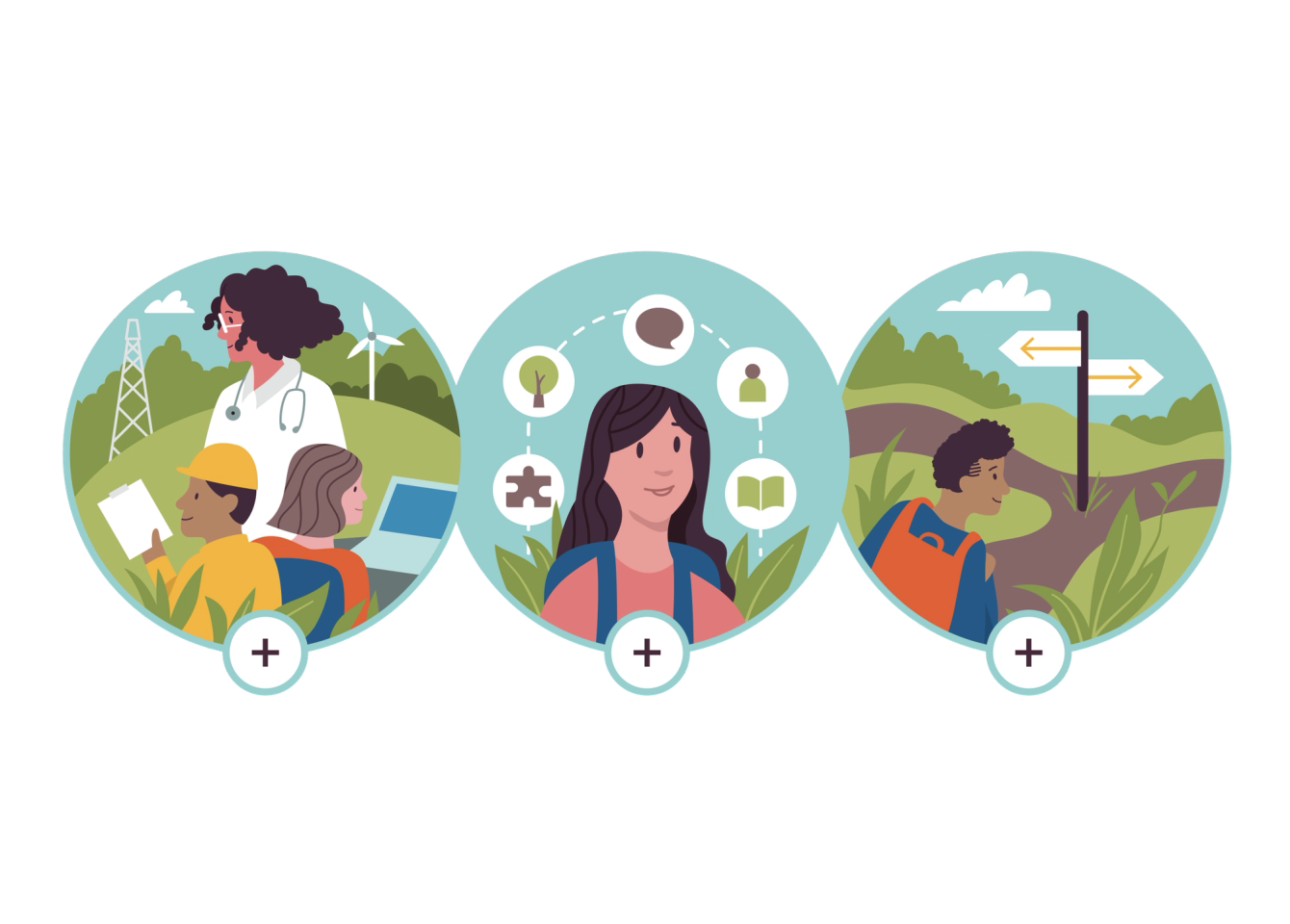
Throughout this topic, we’ll unpack three connected ideas: how AI is changing work, the value of human skills, and how educators can help students prepare for future opportunities. Together, these ideas can help you think about what career readiness means today.
Changing Work
Did You Know?
Technology doesn’t change every career in the same way. Statistics Canada (2026) found that skilled trades such as plumbing, carpentry, and welding may be less exposed to AI because much of their work involves hands-on tasks. However, some repetitive tasks in these occupations may be more suited to automation.
Human Skills
Did You Know?
A study examining Canadian job postings found that demand for social and language skills increased more than other skill categories over the past decade in occupations highly exposed to AI (Green, 2024).
Future Opportunities
Did You Know?
A 2026 U.S. Gallup survey found that 42% of young people aged 14–29 felt anxious about AI, while 48% of Gen Z students believed AI skills would be necessary for their future careers.
Evolving Career Sector Pathways
AI is already becoming part of how Canadians work. Statistics Canada (2026) found that more than one-third (35.9%) of Canadian workers had used generative AI tools as part of their jobs in the previous year. AI adoption among Canadian businesses is also growing, with the proportion using AI to produce goods or deliver services more than tripling from 6.1% in 2024 to 19.2% in 2026 (Statistics Canada, 2026).
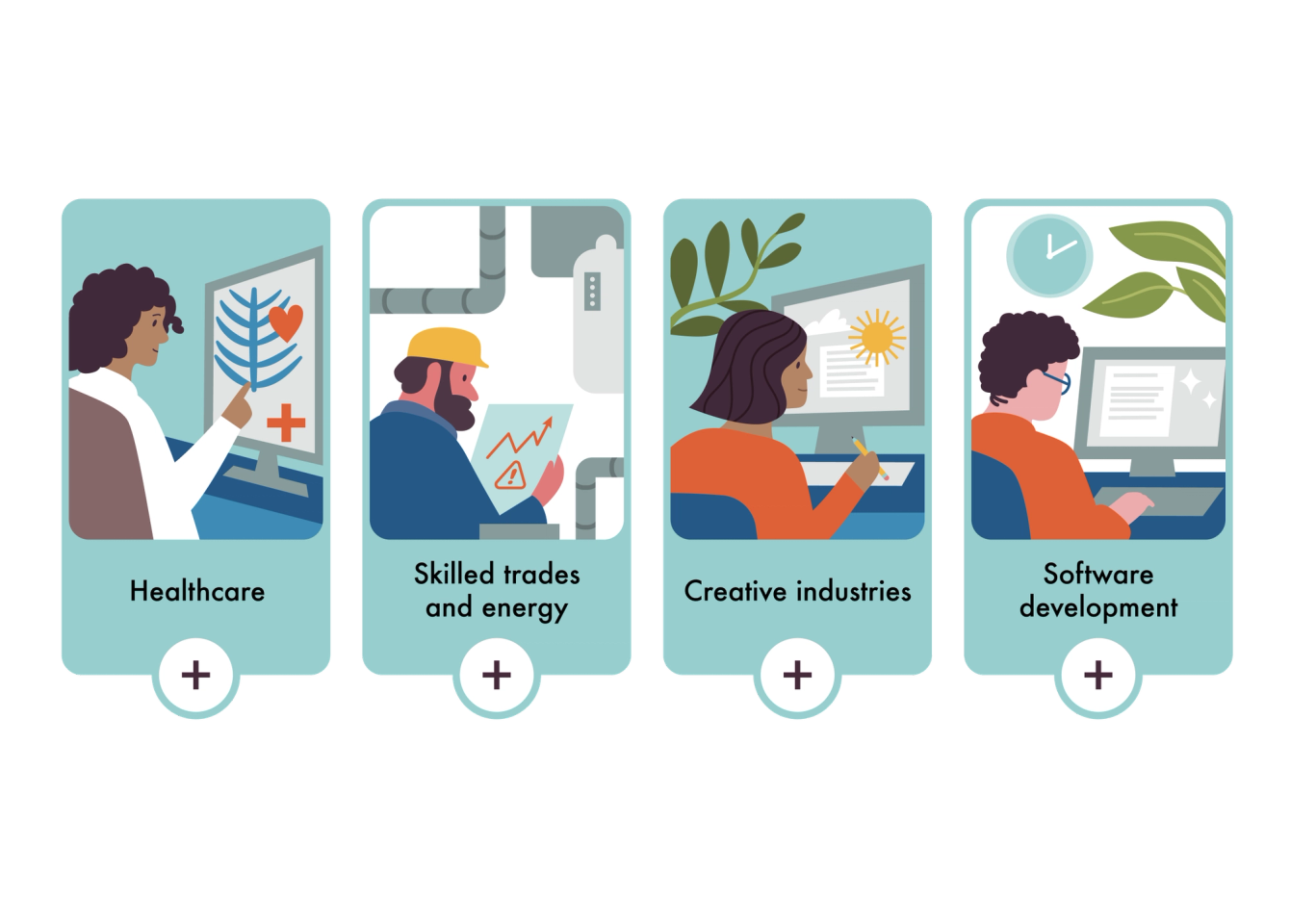
But these changes don’t look the same across every career. From healthcare and skilled trades, to creative industries and software development, AI is introducing new possibilities for how people work, solve problems, and apply their expertise.
Healthcare
AI Helps Radiologists Detect More Breast Cancers
A large Swedish clinical trial involving approximately 106,000 women found that AI-supported mammography screening detected 29% more cancers than standard screening, while reducing radiologists’ screen-reading workload by 44%.
Radiologists still interpreted images and made clinical assessments. AI changed how screening work was organized rather than eliminating the need for medical expertise.
Read the Full Study: Screening performance and characteristics of breast cancer detected in the Mammography Screening with Artificial Intelligence trial (MASAI)
Skilled Trades and Energy
Can AI Detect Wind Turbine Problems Before They Happen?
Wind turbines rely on complex machinery that requires regular inspection and maintenance. In a 2024 study, researchers used machine learning to analyze equipment data and identify a gearbox fault several weeks earlier than conventional monitoring methods.
This research demonstrates how AI could support wind turbine technicians and maintenance engineers by providing earlier warnings, helping them investigate potential problems and plan repairs.
Read the Full Study: Wind turbine gearbox condition monitoring through the sequential analysis of industrial SCADA and vibration data
Creative Industries
Filmmakers Experiment with AI at Sundance
For the 2026 Sundance Film Festival, Adobe commissioned two short films from directors Momo Wang and Taryn O’Neill. The productions combined traditional filmmaking with generative AI, using the technology for creative experimentation and parts of the production process.
It’s an interesting example of how filmmakers can explore new techniques while retaining responsibility for storytelling, artistic direction, and final creative choices.
Read the Full Story: Sundance Dispatch: Expanding creative expression in filmmaking with generative AI
Software Development
Could AI Make Software Development More Accessible?
AI coding tools are making it easier for people without programming experience to experiment with software development. A 2026 study found that generative AI helped people with limited technical skills quickly turn ideas into working prototypes, a practice sometimes called vibe coding.
However, participants faced challenges with code quality, security, and maintaining applications beyond the prototype stage. The findings suggest that while AI can make software creation more accessible, technical expertise remains important for building reliable applications.
Read the Full Study: How GenAI and Vibe Coding Accelerate Prototyping Across Technical Skill Levels
These real-world examples offer just a glimpse of how AI is changing the world of work. As new technologies emerge, the skills people use, the tasks they perform, and even the careers available to them may change. But no matter how careers change, there are skills students can build today that will help them along the way.
Human Skills in an Age of AI
Knowing about AI tools and technology, or even how to use them, is only one part of preparing for the future. People, and students, also need skills that help them communicate, collaborate, and make thoughtful decisions.
These are often called transferable skills because they can be applied across different jobs, industries, and situations. A nurse, electrician, and project manager may use different tools and specialized knowledge, but all three need to communicate clearly, respond to unexpected challenges, and work effectively with others.
What Does the Research Tell Us About These Skills in a Changing Workforce?
The OECD’s Artificial Intelligence and the Changing Demand for Skills in Canada (2024) examined how the skills requested in Canadian job postings changed between 2012 and 2022. It found that demand for social, emotional, and language skills increased in occupations highly exposed to AI. Here, “highly exposed” means that a larger share of the tasks in those occupations could be affected by AI capabilities; it does not necessarily mean the jobs are likely to be replaced by AI. These included teamwork, adaptability, motivation, and communication in English or French.
While AI isn’t responsible for all these changes, they reinforce the value of communication, collaboration, and adaptability in the workplace.
In the previous topic, we saw how classroom activities can introduce AI concepts while developing broader skills. However, preparing students for a changing workforce doesn’t always require a focus on technology. Many transferable skills are already part of everyday teaching and learning, and small adjustments to existing activities can create more opportunities for students to strengthen them.
Try It: Small Changes, Stronger Skills
Classroom Activity: Students work in groups to create a presentation about a local environmental issue.
A Possible Adjustment: Assign students different stakeholder perspectives and ask them to negotiate a shared recommendation before preparing their presentation.
Reflect: Are students simply dividing up the work, or are they practicing how to listen, negotiate, and reach a shared decision?
Preparing Youth for Unimagined Careers
It’s difficult to predict exactly what future careers will look like, especially as AI and other technologies continue to develop. But preparing students for that uncertainty doesn’t mean having all the answers. It can start with helping them stay curious, explore different interests, and become comfortable learning new things. But how can educators help students stay curious and open to new possibilities?
Classroom Activity: Invite students to investigate a career they’ve never considered and identify something that surprises or interests them about it.
Equitable Access to Digital Futures
Students may have access to a device but still face barriers related to internet reliability, affordability, accessible learning materials, mentorship, extracurricular opportunities, or exposure to different careers. Encouraging curiosity and career exploration is important, but students need meaningful opportunities to act on those interests.
Research shows that these opportunities are not equally available. The OECD’s State of Global Teenage Career Preparation report (2025) found that students from more advantaged backgrounds participated more frequently in most career guidance activities, including opportunities to connect with people in the workforce.
In Canada, access can also be shaped by geography and community resources. For example, Statistics Canada (2023) has documented how distance, transportation costs, and limited access to educational services can create additional barriers for First Nations youth living on reserve. Students may also have limited opportunities to see people with backgrounds similar to their own represented in technology and STEM careers.
Making Career Exploration More Inclusive
Many of these barriers reflect broader social and systemic inequalities that educators cannot address alone. However, we can consider whether classroom activities unintentionally depend on resources, experiences, or personal connections that not all students have.
The examples below suggest small adjustments that may reduce certain barriers to participation. They are not solutions to inequity, but ways to make career exploration more inclusive within existing learning.
Activity: Students explore AI tools or career websites independently at home.
Possible Adjustment: Offer an in-class demonstration, printed career profiles, or an offline case study.
Career Exploration & Digital Access Resources
Educators don’t have to develop career exploration activities all on their own. The following Canadian resources offer existing classroom materials, career information, and opportunities to explore technology-related pathways.
- Government of Canada Job BankExplore free career planning tools, including career and personality quizzes, job profiles, career transition options, training opportunities, and guidance on planning future career pathways. More suited for high school students.External link
- Government of Canada STEM ResourcesFind existing STEM learning activities and Canadian educational resources.External link
- ActuaExplore STEM programs and initiatives designed to support participation among historically underserved groups.External link
- Computers for Schools PlusA Government of Canada initiative providing refurbished computers and digital equipment to eligible schools, Indigenous communities, nonprofit organizations, and low-income Canadians.External link
- Amii K–12 AI Learning KitsExplore classroom-ready materials, including Careers Reimagined, which examines AI’s influence on industries and careers.External link